Quick Summary
- The Players: Global insurance heavyweights Allianz SE and Sun Life Financial are leading a competitive bidding process for HSBC’s Singapore insurance unit, alongside Japanese majors Dai-ichi Life and Nippon Life.
- The Valuation: Market insiders estimate the deal could fetch upwards of US$1 billion, marking one of the most significant Asian insurance M&A transactions in recent years.
- The Logic: HSBC is executing a "strategic review" aimed at simplifying its complex global structure, offloading non-core assets to double down on high-margin wealth management and core commercial lending.
- The Prize: Singapore’s life insurance market is booming; it recorded a 15.9% YoY growth in annual premium policies in 2025, reaching S$4.88 billion ($3.86 billion).
The landscape of Asian financial services is undergoing a profound transformation, and Singapore sits at the very heart of this shift. As HSBC Holdings Plc looks to sharpen its focus on capital efficiency, its Singapore insurance arm—HSBC Life Singapore—has become the trophy in a high-stakes auction. For long-term investors and market observers, this isn't just a simple divestment; it is a litmus test for the valuation of the Southeast Asian insurance market and a clear signal of how global banks are retooling their balance sheets for a "wealth-first" future.
The Billion-Dollar Race: Who is Vying for HSBC Life?
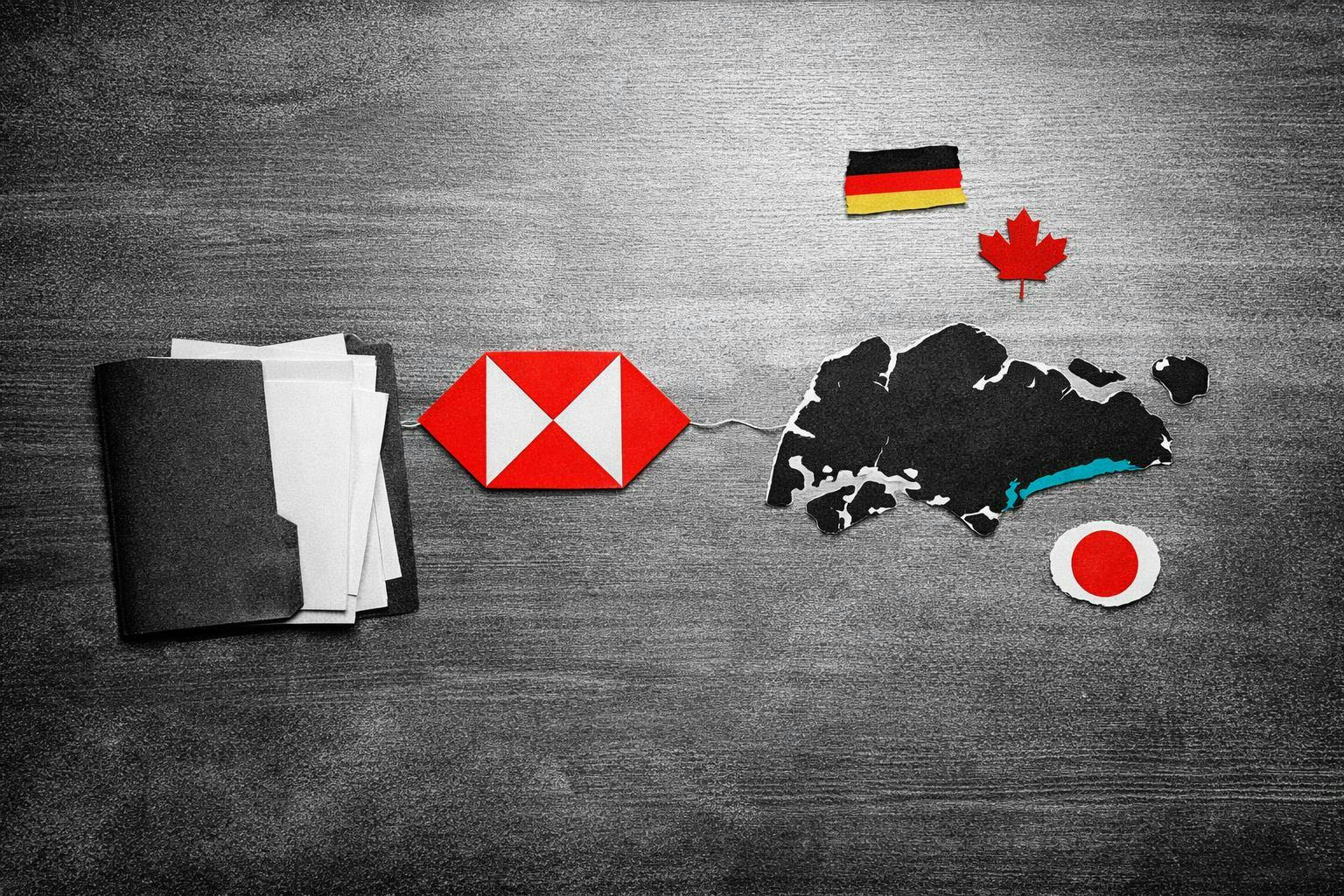
The bidding pool for HSBC’s Singapore insurance unit reads like a "who’s who" of global capital. Allianz SE, the German giant, is reportedly circling the asset with intent. For Allianz, this bid is particularly poignant, following their recent regulatory hurdles in Singapore involving a proposed majority stake in Income Insurance. Acquiring HSBC’s unit would offer a cleaner, private-sector path to scaling their presence in the city-state.
Joining them is Sun Life Financial, the Canadian insurer that has been aggressively expanding its Asian footprint. Sun Life’s strategy has increasingly centered on high-net-worth (HNW) segments and the burgeoning middle class in Southeast Asia, making HSBC’s established Singaporean book a natural fit.
However, the competition isn't limited to Western firms. Japanese insurance titans—Dai-ichi Life and Nippon Life—are also in the mix. Facing stagnant growth and aging demographics in their home market, Japanese insurers are flush with capital and hungry for the growth yields offered by Singapore’s affluent resident base.
Comparing the Potential Bidders
| Bidder | Primary Strategic Interest | Regional Footprint Strength |
|---|---|---|
| Allianz SE | Market scale and diversifying away from European saturation. | High; seeking to rebound after recent regulatory blocks. |
| Sun Life | Expanding HNW and UHNW wealth-insurance convergence. | Strong; deep roots in Hong Kong and Canada-Asia corridors. |
| Dai-ichi Life | Seeking yield outside of Japan's low-interest-rate environment. | Growing; active M&A history in SE Asia. |
| Nippon Life | Long-term capital deployment in stable, high-growth hubs. | Moderate; looking for a strategic anchor in Singapore. |
HSBC’s Strategic Pivot: Why Divest Now?
From a portfolio strategy perspective, HSBC’s move to review its Singapore insurance business is a classic example of "slimming down to scale up." Under its current leadership, the bank has been on a relentless quest to simplify its global operations. By divesting "insurance manufacturing"—the capital-intensive process of creating and underwriting policies—HSBC can move toward an "asset-light" model.
The strategic rationale is three-fold:
- Capital Liberation: Insurance businesses are heavy on regulatory capital. Selling the unit frees up billions that can be redirected toward share buybacks, higher dividends, or investments in digital banking infrastructure.
- Focus on Wealth Management: HSBC doesn't necessarily want to stop selling insurance; it wants to stop underwriting it. By offloading the manufacturing side, the bank can focus on its strength: distributing third-party products to its vast wealth management client base, earning fee income without the balance-sheet risk.
- Streamlining for the 2026 Outlook: As global interest rates stabilize, banks are finding that the "all-things-to-all-people" model is less efficient than being a specialized powerhouse in core lending and private banking.
Olivia’s Insight: "Investors should view this divestment not as a retreat from Singapore, but as a strategic reallocation. HSBC is trading the steady but low-ROE insurance underwriting business for the high-velocity, high-margin wealth management sector. It’s a move toward capital efficiency that markets typically reward."
Market Snapshot: Why Singapore is a High-Stakes Prize
The intensity of the bidding war is justified by the sheer strength of the Singaporean market. While other global regions have seen tepid growth, Singapore’s life insurance industry is firing on all cylinders.
In 2025, the industry recorded a staggering 11.3% overall growth, with total weighted new business premiums reaching S$6.53 billion. The engine of this growth is the shift toward long-term financial planning. Annual premium policies, often seen as a bellwether for consumer confidence and market health, surged by 15.9% YoY to reach S$4.88 billion ($3.86 billion).
The Dominance of Health and Shield Plans
Beyond life insurance, the health segment remains a cornerstone of the Singaporean financial ecosystem.
- Integrated Shield Plans (IPs): These remain the dominant force in the health sector. In 2025, IPs represented 90% of total individual health premiums.
- Resident Coverage: Approximately 71% of Singapore residents (roughly 2.9 million people) are covered by IPs, providing a stable, recurring revenue stream for whoever wins the HSBC bid.
This high penetration rate combined with a sophisticated regulatory environment makes Singapore one of the "safest" yet most "lucrative" bets for global insurers looking to park capital in Asia.
The 'Beyond the Core' Trend: 2026 Insurance M&A Outlook
As we look toward 2026, the potential HSBC sale is part of a broader trend of consolidation and specialization in Asian M&A. Insurers are no longer just looking for "growth"—they are looking for "scale in high-savings markets."
Singapore acts as a regional hub for High-Net-Worth (HNW) and Ultra-High-Net-Worth (UHNW) individuals. For an acquirer like Sun Life or Allianz, the HSBC insurance unit isn't just about the current policyholders; it’s about the bancassurance partnership that often accompanies such deals. The ability to sell insurance through HSBC’s banking network is the real "alpha" in this transaction.
However, the path to a deal isn't without hurdles. Regulatory scrutiny in Singapore has tightened. Any successful bidder will need to demonstrate not just financial muscle, but a commitment to consumer protection and long-term market stability. The lessons from Allianz’s previous attempt to acquire Income Insurance suggest that the Monetary Authority of Singapore (MAS) will look closely at the social and systemic implications of the deal, even in the private sector.
Investor Implications: Risks vs. Rewards
For those holding HSBC shares or looking at the broader insurance sector, the implications are nuanced.
The Rewards:
- Earnings Clarity: A sale would simplify HSBC’s earnings report, removing the volatility often associated with insurance actuarial adjustments.
- Dividend Potential: Divestitures of this scale frequently precede special dividends or expanded buyback programs.
- Strategic Re-Rating: If HSBC successfully pivots to a dominant wealth management player in Asia, its price-to-earnings (P/E) multiple could see a significant upward re-rating to match other pure-play wealth managers.
The Risks:
- Loss of Diversification: Insurance provides a steady, counter-cyclical flow of fee-like earnings. Removing this "ballast" makes the bank more sensitive to interest rate cycles.
- Execution Risk: If the transition to third-party distribution isn't seamless, HSBC could lose market share in the lucrative bancassurance space.
In the final analysis, Singapore remains an indispensable financial hub. The fact that four global giants are willing to pay a premium for a slice of its insurance market reinforces the city-state's status as the "Switzerland of Asia."
FAQ
Why is HSBC selling its Singapore insurance unit? HSBC is undergoing a strategic review to simplify its global operations and free up capital. By offloading the insurance manufacturing business, the bank aims to focus on higher-margin sectors like wealth management and core commercial banking.
Who are the frontrunners in the bidding process? The primary bidders include Allianz SE and Sun Life Financial. However, significant interest has also been shown by Japanese firms Dai-ichi Life and Nippon Life.
How is the Singapore insurance market performing? The market is exceptionally strong. In 2025, the life insurance industry grew by 11.3%, with annual premium policies increasing by 15.9%. Additionally, 71% of residents are covered by Integrated Shield Plans, making it a very stable market for health insurance.
What is the estimated value of the deal? While official figures haven't been released, analysts and market insiders expect the deal to be valued at more than US$1 billion.