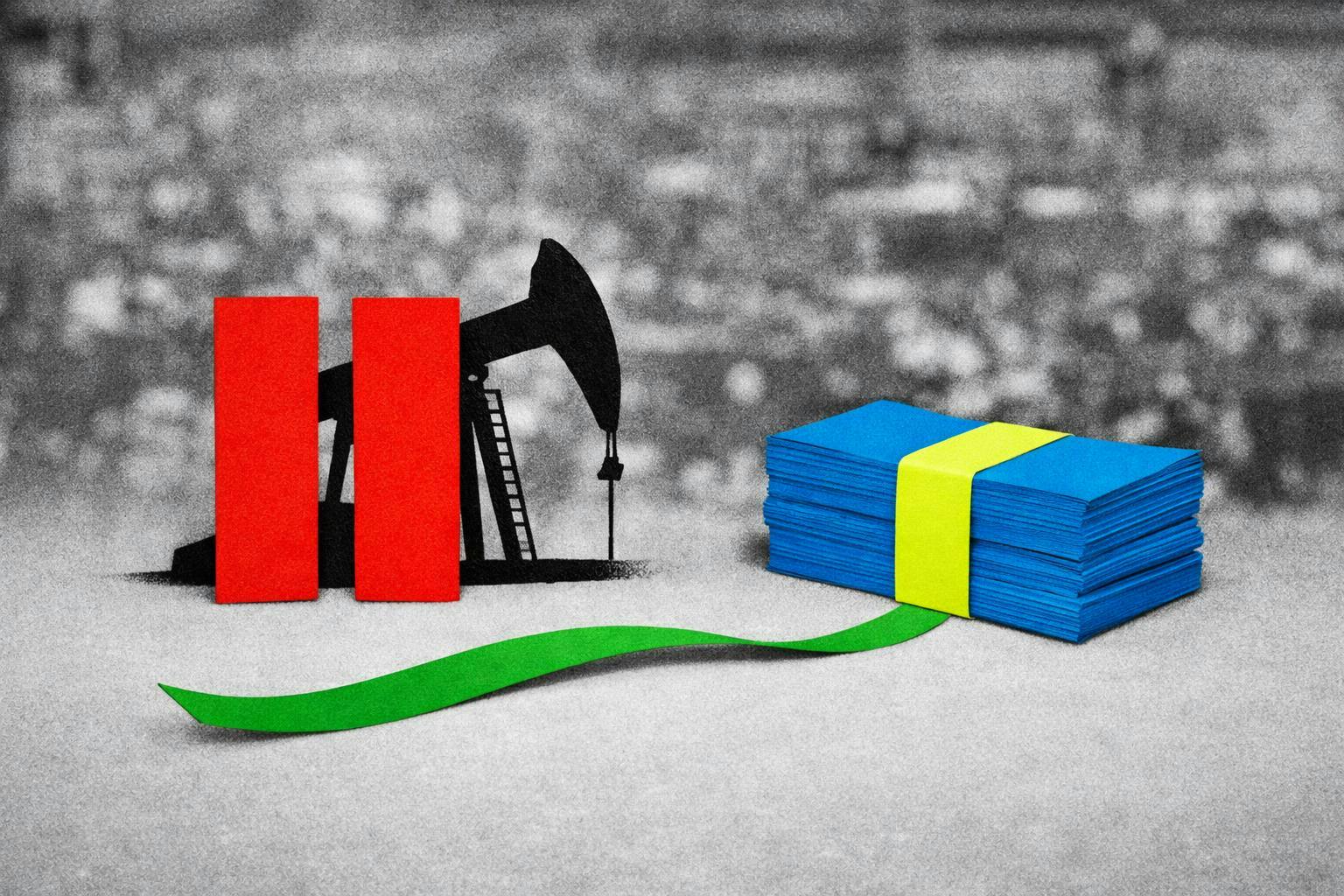
As WTI crude oil prices surged toward $93 in April 2026, many individual investors expected a parallel boom in their portfolios. Instead, a massive 37-point performance gap emerged between energy stocks vs oil prices. While crude oil futures leaped significantly in response to supply disruptions, the Energy Select Sector SPDR Fund (XLE) barely captured the momentum.
Direct Answer: Energy stocks often trail crude oil prices because equities are influenced by corporate variables like debt, capital expenditure, and operational costs that do not affect the physical commodity. While oil futures reflect immediate spot price shifts, energy companies utilize hedging strategies that may lock in lower prices, preventing them from capturing the full upside of a sudden price spike. Furthermore, the performance gap is widened by geopolitical risk premiums that drive up commodity prices but weigh on equity sentiment due to increased shipping costs and infrastructure threats.
The April 2026 Market Shock: $93 Crude vs. Equity Stagnation
On April 8, 2026, the global energy market reached a fever pitch. Driven by escalating tensions in the Strait of Hormuz, benchmark Brent crude prices leaped to approximately $92.69 per barrel, touching their highest levels since late 2023. Domestically, WTI crude hit a peak of $92.95.
For many, the logical move was to hold broad energy ETFs. However, the data told a different story. In early 2026, WTI crude oil prices surged 76.2% year-to-date while the Energy Select Sector SPDR Fund (XLE) rose by only 39%. This created a staggering 37-percentage-point performance gap. If you are asking why are energy stocks trailing oil prices right now, the answer lies in the friction between a volatile commodity and the companies that extract it.
Why the Energy Select Sector SPDR Isn't Rising with Crude
To understand the energy sector performance 2026, one must recognize the fundamental difference between oil futures etfs and energy stocks. When you buy an ETF like USO (United States Oil Fund), you are buying crude oil futures. These track the spot price of the physical barrels almost 1:1.
Conversely, when you buy the XLE or individual energy stocks, you are buying a business. Businesses have "drag" that physical commodities do not.
- Share Dilution: Some companies, such as Northern Oil and Gas, recently executed share offerings (e.g., a 7.2 million share offering) to fund acquisitions. While this grows the company, it dilutes existing shareholders, keeping the stock price flat even as the oil they produce becomes more valuable.
- Capital Expenditure (CapEx): Rising oil prices often coincide with rising labor and equipment costs. If it costs more to drill a well, the profit margin doesn't expand as fast as the headline crude oil price surge might suggest.
- Market Sentiment: The energy sector's weighting in the S&P 500 was approximately 5.9% in early 2026, which remains significantly lower than its historical average of 20% in the 1970s. Many institutional investors are still cautious about the long-term energy transition, leading to a valuation "ceiling" on equities.
The Operational Filter: How Hedging and Costs Mute the Upside
A primary reason for the broken oil equity correlation is the "hedging wall." Most upstream production companies do not sell their oil at today's spot price. Instead, to protect their free cash flow and satisfy bank debt requirements, they use hedging strategies—selling their future production at a fixed price (e.g., $75/bbl) months in advance.
When oil spikes to $93, these companies are still delivering barrels at $75. This is how hedging impacts energy company profits during oil spikes: it provides a safety net during crashes but acts as a lead weight during rallies. For the investor, this means the stock doesn't reflect the "windfall" until these hedges roll off, which can take six to twelve months.
Furthermore, supply disruption in regions like the Middle East adds a "fear premium" to the commodity. While this helps the USO ETF, it can actually hurt energy stocks. High oil prices can trigger inflation and raise the "recession probability" (currently pegged at 31% by some analysts), which leads investors to sell equities across the board, including energy.
Winners and Losers: Investing in Oil Producers vs. Refiners
Not all energy stocks are created equal. In the 2026 landscape, the "Midstream" and "Downstream" sectors behave very differently than the "Upstream" producers.
- Downstream Refining: Companies like PBF Energy thrive when the "crack spread"—the difference between the price of crude and the price of refined products like gasoline—widens. In early 2026, we saw crack spreads expand from $19 to over $52. These stocks often outperform when crude prices are high but stable.
- Integrated Giants: Companies like Chevron and ExxonMobil offer dividend durability. They are less sensitive to the immediate price of WTI because they own the entire chain, from the wellhead to the gas station. This makes them the best energy stocks to buy when oil hits 100, as they provide a buffer against geopolitical risk.
2026 Energy Equity Comparison Table
| Ticker | Sub-Sector | Sensitivity to Oil Price | Dividend Yield (Est.) | Primary Focus |
|---|---|---|---|---|
| XLE | Sector ETF | Moderate | 3.2% | Diversified Large-Cap |
| USO | Commodity ETF | Very High | N/A | Front-Month Futures |
| CVX | Integrated | Low/Moderate | 4.1% | Global Production/Refining |
| PBF | Refining | Variable | 1.8% | Crack Spread Optimization |
| NOG | Upstream | High | 3.5% | Non-Operated Shale |
The Road Ahead: Will Energy Equities Eventually Catch Up?
If you are wondering will energy equities eventually catch up to rising oil prices, history suggests a "catch-up" trade usually occurs, but only once price volatility settles. Markets hate uncertainty. As long as the crude oil price surge is driven by sudden shocks, equities will lag.
However, if oil stabilizes above $85, companies will reset their hedges at higher levels, and their free cash flow will surge. This is when the investing in oil producers vs refiners during supply shocks debate shifts toward the producers. As companies pay down debt and initiate massive share buybacks, the valuation gap often closes.
For the long-term investor, the goal isn't to chase the $93 spike but to identify companies with the balance sheet strength to survive the inevitable "mean reversion" when supply returns to the market.
FAQ
Why are energy stocks trailing oil prices right now?
Energy stocks are businesses with overhead, debt, and hedging contracts. When oil prices spike suddenly due to geopolitical tension, the physical commodity reacts instantly, but stocks lag because their current profits are often "locked in" at lower prices through hedges. Additionally, broader market fears of a recession caused by high energy costs can suppress stock prices even as oil rises.
What is the difference between oil futures ETFs and energy stocks?
Oil futures ETFs like USO track the price of physical oil contracts. They are high-volatility tools for short-term trading. Energy stocks (or ETFs like XLE) represent ownership in companies. These stocks are influenced by earnings reports, management decisions, dividends, and the broader stock market, meaning they do not always move in tandem with the price of crude.
Why is the Energy Select Sector SPDR not rising with crude?
The XLE is heavily weighted toward integrated giants like ExxonMobil and Chevron. These companies have diversified operations, including refining and chemicals, which can see profit margins squeezed when crude input costs rise too fast. Furthermore, investor concerns about "peak demand" and the shift to green energy often prevent energy stocks from reaching the high valuations they saw in previous decades.
Summary for the Strategic Investor
The divergence between energy stocks vs oil prices in 2026 is a reminder that the commodity is a trade, while the stock is an investment. While the crude oil price surge provides the headline, the real story for your portfolio is found in capital discipline and free cash flow. If you are seeking immediate exposure to a $93 or $100 price target, futures-based instruments are the tool. But for those looking to build wealth through the 2020s, the "lagging" energy equities actually offer a more attractive entry point, providing yield and value while the rest of the market chases the volatility.