Quick Facts
- RBNZ Decision (April 8, 2026): The Official Cash Rate (OCR) was maintained at 2.25%.
- Current Market Status: Rates have fallen significantly from the 5.50% peak of 2024, but the downward trend has stalled.
- Major Bank Forecast: ANZ and Westpac predict the OCR will rise to 2.50% by December 2026.
- Mortgage Impact: One-year fixed rates are expected to climb from 4.48% in April to roughly 5.2% by year-end.
- Top Risk Factor: Global energy price volatility and its impact on domestic CPI inflation.
For New Zealand homeowners and property investors, the recent stability in interest rates has felt like a hard-won reprieve. However, the Reserve Bank of New Zealand's (RBNZ) decision to hold the Official Cash Rate at 2.25% this April signals a shift from "aggressive easing" to a "tactical pause." While the immediate pressure to hike has subsided, the NZ mortgage rate outlook is becoming increasingly complex as global economic cross-currents—specifically oil price shocks and persistent core inflation—begin to weigh on the RBNZ’s next move.
1. The April 2026 RBNZ Decision: A Tactical Pause
The Reserve Bank of New Zealand maintained the Official Cash Rate at 2.25% during its April 8, 2026, monetary policy review. This Official Cash Rate hold marks a significant moment in the current cycle, following a series of reductions that brought the rate down from a restrictive 5.50% in 2024. For those tracking the NZ mortgage rate outlook, this New Zealand interest rate decision is best described as a "wait-and-see" maneuver.
The RBNZ's stance reflects a delicate balancing act: domestic demand has softened, providing some relief on the inflation front, but external factors are refusing to cooperate. When we look at how the RBNZ interest rate decision impacts home loans, we have to recognize that the central bank is no longer just fighting domestic "overheating." It is now guarding against "imported" inflation. This pause suggests that while the era of rapid-fire rate cuts is over, the RBNZ is not yet ready to reverse course—though they have clearly signaled they will tighten policy if wage growth or core inflation exceeds their 2% target midpoint.
2. Why the Hold? Oil Shocks and Domestic Inflation
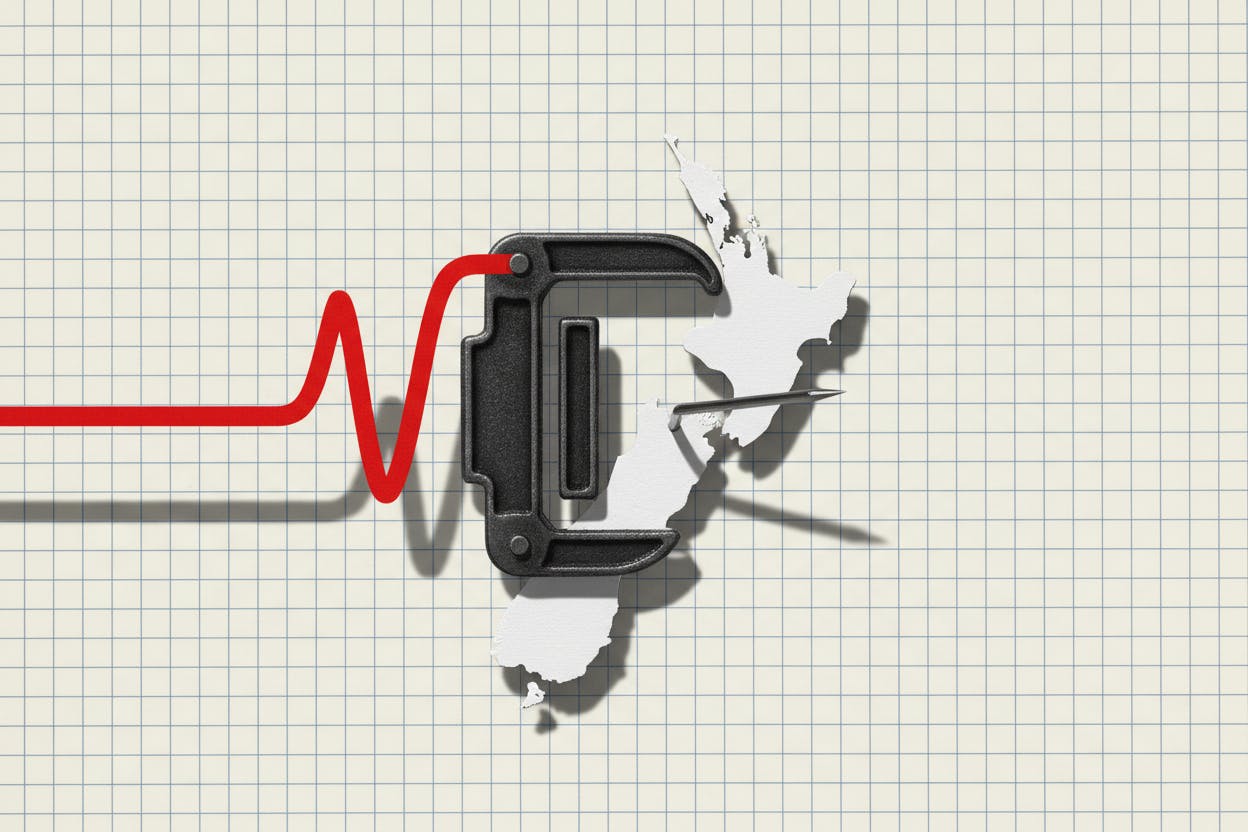
To understand why the RBNZ has hit the brakes on further cuts, we have to look toward the Middle East and global supply chains. The impact of oil prices on New Zealand mortgage rates is more direct than many realize. As energy costs rise globally, the cost of transporting goods into New Zealand increases, which eventually trickles down into the CPI inflation figures that the RBNZ watches so closely.
Unlike the inflationary surge of 2022, the 2026 landscape features higher spare capacity in the economy. However, "sticky" inflation remains a concern. The RBNZ’s monetary policy statement highlights that while petrol prices are a volatile component, they have a "second-round" effect on core inflation by driving up the costs of services and locally produced goods.
The current yield curve suggests that investors are pricing in a period of sustained, moderate inflation rather than a quick return to the 1-3% target band. For the average borrower, this means that even if the OCR stays at 2.25% for a few more months, the "wholesale interest rates"—the rates banks pay to borrow money—might remain elevated, preventing retail mortgage rates from dropping further.
3. Bank Forecasts: The Dove, The Hawk, and The Neutral
In my years covering housing finance, I’ve found that the "big four" banks rarely move in perfect lockstep during a transition period. The current RBNZ OCR forecast from major financial institutions shows a widening gap in expectations for the end of 2026 and into 2027. This divergence is crucial for your NZ mortgage rate outlook because bank competition and their internal risk assessments often dictate the "specials" you see on the front window.
| Institution | 2026 OCR Forecast (Year-End) | 2027 Outlook | Stance |
|---|---|---|---|
| ANZ | 2.50% | Gradual Hikes | Hawkish |
| Westpac | 2.50% | 4.00% by end-2027 | Very Hawkish |
| ASB | 2.25% | Neutral / Hold | Dovish |
| BNZ | 2.25% | 2.50% early 2027 | Cautious |
The consensus among major financial institutions, including ANZ and Westpac, is that the OCR will rise to 2.50% by December 2026. Their reasoning is simple: inflation is proving more resilient than expected. These New Zealand mortgage rate predictions for borrowers highlight that while the RBNZ is holding today, the "neutral rate"—the level where rates neither stimulate nor contract the economy—is likely higher than it was pre-pandemic. If banks believe the neutral rate is moving up, they will maintain higher bank margins, meaning your mortgage rate won't fall even if the OCR does.
4. The Real-Dollar Impact: $500k Loan Case Study
Abstract percentages are fine for economists, but as a borrower, you need to know what this means for your monthly budget. We are moving from an era of "falling rates" to "plateauing rates with upward risk." Let’s look at the math for a typical $500,000 mortgage on a 30-year term.
In April 2026, the average negotiated one-year fixed rate was 4.48%. At this rate, your monthly principal and interest payment would be approximately $2,533.
However, market projections indicate that one-year fixed mortgage rates are expected to increase to approximately 5.2% by the end of 2026. If you are refixing later this year at 5.2%, that same $500,000 loan will cost you $2,745 per month.
- The Difference: An extra $212 per month, or roughly $2,544 per year.
So, what does a central bank rate hold mean for refixing? It means the "bargains" are likely behind us for this cycle. If you are coming off a lower rate from two years ago, the "sticker shock" might be less than it was in 2024, but the cost of waiting for even lower rates could be high if the 5.2% forecast holds true.
5. Strategy: Should You Fix, Float, or Split?
When clients ask me, "Should I fix my mortgage or stay floating?" in this environment, my answer is always based on their personal risk tolerance. The 2026 market is not one for "gambling" on a sudden rate crash.
Will NZ interest rates drop soon? Based on the current RBNZ stance and the forecasted rise to 2.50% by December, a further drop in 2026 is highly unlikely. Here is how I would approach your strategy:
Scenario A: The Budget Protector (Sticky Inflation)
If you have a tight budget and cannot afford a $200+ monthly increase, prioritize certainty.
- Strategy: Fix for 2 or 3 years. While the 1-year rate might look tempting, locking in a slightly higher 3-year rate protects you against the Westpac "worst-case" scenario of a 4% OCR by 2027.
- Best for: First-home buyers and families with fixed incomes.
Scenario B: The Flexible Investor (Laddering Strategy)
If you have more cash flow and want to hedge your bets, don't put all your eggs in one basket.
- Strategy: Use a "split-loan" or "laddering" approach. Split your mortgage into three parts: one-third on a 6-month fix, one-third on an 18-month fix, and one-third on a 3-year fix.
- Why? This ensures that only a portion of your debt is exposed to a rate hike at any one time, while still allowing you to take advantage if rates unexpectedly dip.
Borrower Checklist for 2026:
- ✔ Audit your refix date: Start looking at options 60–90 days before your current term expires.
- ✔ Check "Unadvertised" Specials: Banks often have discretionary rates for existing customers with 20%+ equity.
- ✔ Review your Floating portion: Keep a small amount on a floating rate only if you plan to make large lump-sum repayments.
FAQ
Will NZ interest rates drop soon?
It is unlikely that mortgage rates will see significant drops in the remainder of 2026. The RBNZ has moved into a "neutral" phase, and major banks expect the OCR to actually rise slightly to 2.50% by December 2026 to combat persistent inflation.
Should I fix my mortgage or stay floating?
Floating rates in New Zealand remain significantly higher than fixed rates, often by 1-2%. Unless you are planning to sell your property or pay off a large portion of the loan in the next few months, fixing is generally the more cost-effective option in the current NZ mortgage rate outlook.
What happens if I refix now versus at the end of 2026?
Borrowers refixing in April 2026 are seeing average rates around 4.48%. If you wait until the end of the year, projections suggest you may be looking at rates closer to 5.2%. Locking in a mid-term fix now could save you over $2,500 a year on a $500k loan.
7. Conclusion: Preparing for the Late-2026 Pivot
The RBNZ’s decision to hold the OCR at 2.25% should be viewed as a "pause with an upward bias." For the first time in two years, the central bank is more concerned about the risks of inflation returning than it is about stimulating a sluggish economy. The RBNZ OCR forecast for the rest of the year suggests that the floor for mortgage rates has likely been reached.
As we look toward the end of 2026, the message for borrowers is clear: the period of easy wins and falling rates is over. Your best move is to be proactive. Don't wait for your bank’s generic "rollover" letter to arrive in the mail. Start analyzing your debt structure today, compare the latest "special" offers, and consider a split-term strategy to hedge against the potential for a 2.50% OCR by Christmas.