Quick Facts
- 2026 Policy Rate: Currently held at 2.25% as the bank monitors global economic shifts.
- Inflation Target: The 2% goal remains the primary driver for all upcoming bank of canada interest rates decisions.
- Mortgage Renewals: Approximately 33% of all Canadian mortgages are scheduled for renewal in 2026 alone.
- Payment Shock: Homeowners should prepare for an average monthly increase of 20% compared to previous terms.
- GDP Growth: Forecasted at a modest 1.1% for 2026, reflecting a cooling but stable economy.
- Key Warning: Senior Deputy Governor Carolyn Rogers indicates that the era of ultra-low borrowing costs is over.
The Bank of Canada interest rate forecast for 2026 remains flexible as officials monitor commodity-driven inflation. While the policy rate was held at 2.25% in early 2026, Senior Deputy Governor Carolyn Rogers has signaled that the Governing Council is prepared to raise rates if energy shocks or core inflation pressures persist. Markets are currently repricing for a potential 'higher-for-longer' scenario to ensure long-term macroeconomic stability.
Carolyn Rogers and the End of Cheap Money
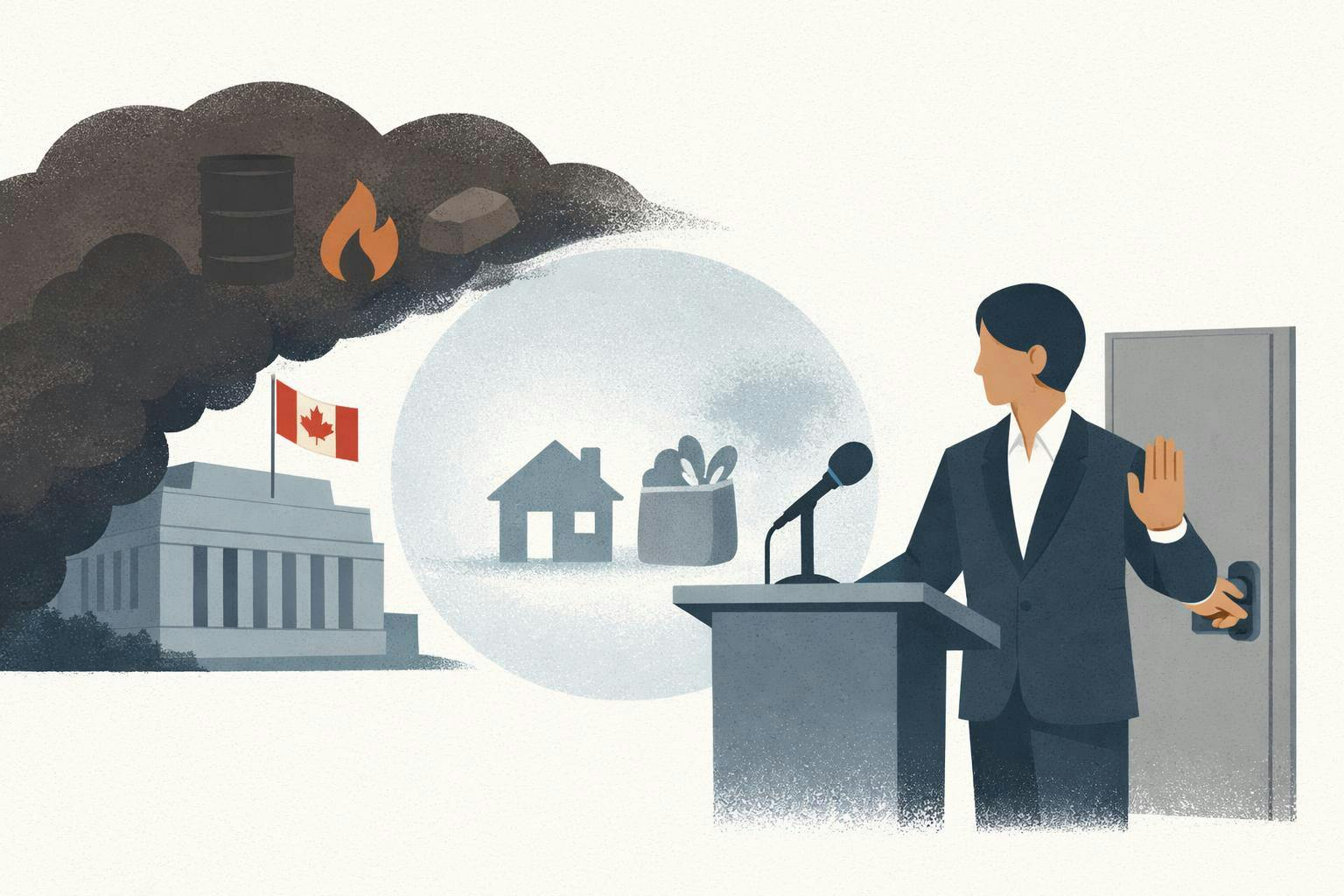
For over a decade, Canadians grew accustomed to historically low borrowing costs. However, Senior Deputy Governor Carolyn Rogers has recently shifted the narrative, warning that the period of unusually low bank of canada interest rates following the 2008–09 global financial crisis has likely ended. This linguistic shift is significant for anyone following the bank of canada interest rate forecast. By moving away from language that previously described lower rates as appropriate, the central bank is signaling a new era of monetary policy flexibility.
The bank is now closely watching what economists call the economic reaction function. This means they are not just looking at where inflation is today, but how the economy reacts to external pressures like energy shocks. If rising energy costs start to bleed into the price of everyday goods—a process known as second-round effects—the bank may decide is bank of canada raising interest rates again is the only way to protect the inflation target. For homeowners, this means that even if rates are currently stable, the risk of a bank of canada interest rate hike triggers remains a reality if core inflation does not settle near the 2% mark.
The 2026 Mortgage Renewal Cliff: Impact on Homeowners
The year 2026 is shaping up to be a pivotal moment for the Canadian housing market. Data shows that approximately 4 million mortgages, representing about 60% of all outstanding debt in the country, are scheduled for renewal between 2025 and 2026. This creates what many analysts call a renewal cliff, where borrowers who locked in sub-2% rates during the pandemic will suddenly face the current reality of mortgage rates canada.
When we analyze how bank of canada interest rates affect affordability, the numbers are sobering. Many homeowners will see a payment shock, with monthly obligations increasing by an average of 20%. This shift has already started to influence borrower behavior, leading to a noticeable rise in debt-to-income ratios across the country. As bank of canada interest rates remain elevated compared to the last decade, the cushion that many families once had is thinning.
To manage this bank of canada interest rate impact on mortgage rates, you should:
- Review your current equity: Knowing how much of your home you actually own can help when negotiating with lenders.
- Monitor Canadian bond yields: These often lead the way for fixed-rate mortgages and can give you a head start on where rates are moving.
- Stress-test your own budget: Calculate your payments at a rate 1% to 2% higher than your current deal to see if your cash flow can handle the change.
Shared Vulnerability: The Parental Co-signing Trend
A concerning trend identified by the Governing Council is the rising reliance on parental co-signers. As bank of canada interest rates have made it harder to qualify for traditional financing, many first-time homebuyers are turning to their parents to bridge the gap. While this helps a new generation enter the market, it creates a web of shared vulnerability.
If the bank of canada interest rate strategy for homeowners remains focused on higher-for-longer, any economic shock could impact both the primary borrower and the co-signer. This increases systemic risk, as the financial health of two households becomes tied to a single mortgage. If you are considering this path, it is essential to understand the risks of co-signing a mortgage bank of canada has highlighted, particularly the potential strain on retirement savings for the older generation.
Consensus Forecast: Big 6 Bank Projections for 2026
Market experts from Canada’s largest financial institutions are currently refining their bank of canada interest rate forecast 2026. While the central bank remains cautious, the general consensus suggests that the policy rate will likely settle in a neutral range that is neither stimulative nor restrictive.
| Institution | 2026 Year-End Policy Rate Forecast | Primary Economic Concern |
|---|---|---|
| RBC | 2.25% | Consumer spending slowdown |
| TD | 2.50% | Persistent shelter inflation |
| BMO | 2.25% | Global trade uncertainty |
| CIBC | 2.00% | Household debt levels |
Planning for these changes requires tracking the bank of canada rate announcement dates 2026. Historically, the Bank maintained its policy interest rate at 5% through much of 2024 to combat inflation, and the lessons learned then are still being applied today. Staying informed about these dates allows you to time your renewal or purchase when the market is most favorable.
FAQ
What is the current Bank of Canada interest rate?
The current policy interest rate is 2.25%, following a period of stability aimed at balancing the 2% inflation target with modest economic growth.
Will mortgage rates drop to 3% again?
While forecasts suggest a gradual easing from peak levels, most economists agree that the era of sub-3% mortgage rates was an anomaly. A neutral rate between 2.25% and 3.5% is more likely for the foreseeable future.
What is the current 5 year mortgage rate in Canada?
Mortgage rates vary by lender and borrower profile, but 5 year fixed rates are currently trending between 4.2% and 5.1%, depending on whether the mortgage is insured or uninsured.
Can I negotiate a mortgage rate?
Yes, you can and should negotiate. Lenders often have room to move on their posted rates, especially if you have a strong credit score or are willing to bring other banking business to the institution.
How much is a mortgage on a $500,000 house in Canada?
With a 20% down payment ($100,000) and a mortgage of $400,000 at a 4.5% interest rate over 25 years, the monthly payment would be approximately $2,213, plus taxes and insurance.
What salary do you need for a $400,000 mortgage?
To qualify for a $400,000 mortgage under current stress-test rules, a household typically needs a gross annual income of approximately $100,000 to $120,000, assuming minimal other debt obligations.
Preparing for a New Economic Reality
As we move through 2026, the key to financial success is proactive adjustment. Whether you are a first-time buyer or a homeowner facing a renewal, preparing for higher interest rates canada is no longer optional—it is a necessity. By understanding the bank of canada interest rate forecast and staying ahead of the payment shock, you can protect your investment and maintain long-term stability in an evolving market. Reach out to a mortgage professional at least six months before your renewal date to explore your options and lock in the best possible terms.