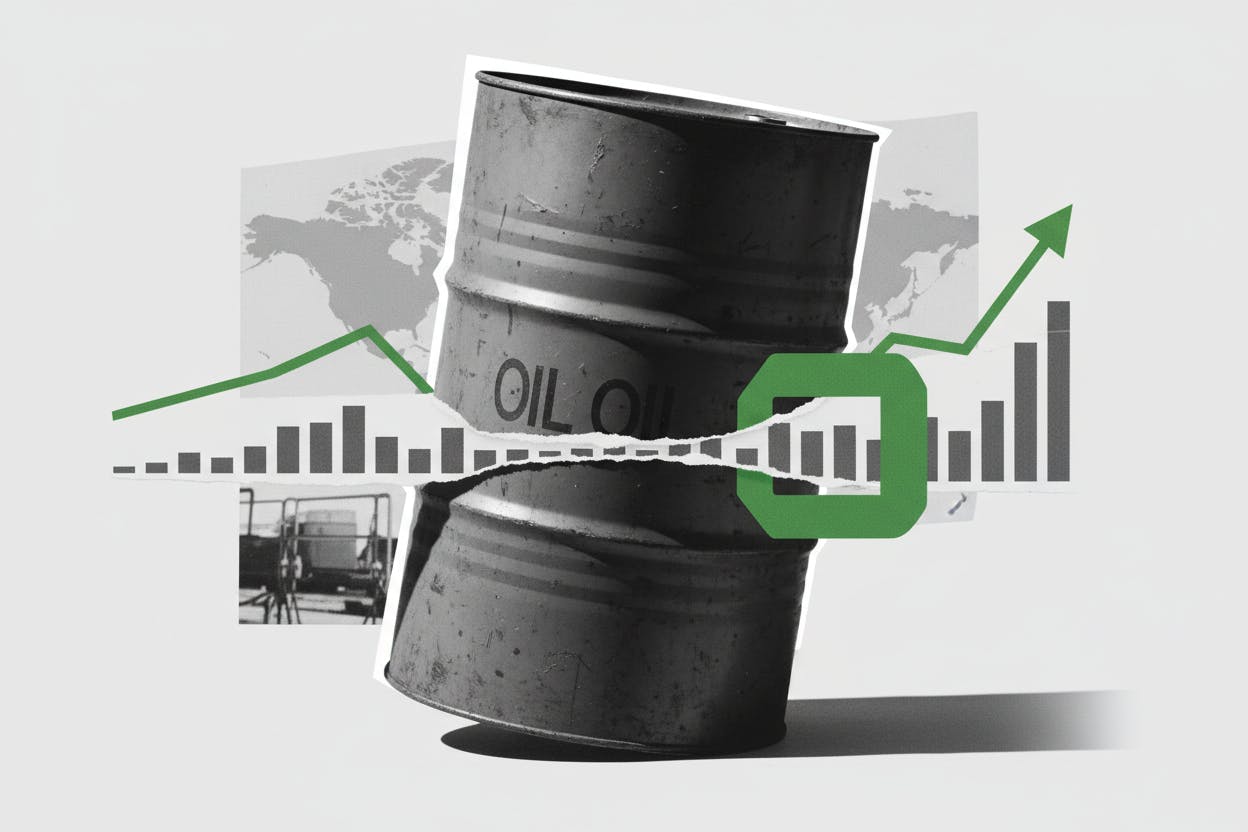
Germany’s DAX has entered a period of significant turbulence, as the psychological and economic barrier of $100-per-barrel oil has once again been breached. For long-term investors, the current retreat to the €23,420 level represents more than just a momentary dip; it is a recalibration of expectations in the face of a dual energy and geopolitical shock.
The primary driver behind this volatility is the escalating tension surrounding the Strait of Hormuz— a chokepoint through which roughly 20% of the world’s daily oil supply transits. With Brent crude surpassing $100 in March 2026, the German industrial complex, the backbone of the DAX, is facing a familiar but formidable enemy: soaring input costs. As an editor specializing in portfolio strategy, my view is that we are witnessing a "margin squeeze" that will separate the resilient innovators from the energy-dependent laggards.
Quick Facts: Germany's Market Reality
- DAX Current Level: €23,420
- Brent Crude Price: >$100/barrel (March 2026)
- 2026 GDP Forecast: 0.8% (downwardly revised)
- Projected 2026 Inflation: 2.5% (Core inflation remains above 2%)
- Energy Correlation: A €30/MWh shift in Dutch TTF gas prices triggers a ~€40/MWh move in German power prices.
The Energy Squeeze: Why the DAX is Under Pressure
The central question facing every institutional desk today is: Why is the German DAX currently under pressure? The answer lies in the structural sensitivity of German industry to energy pricing. Unlike more service-oriented economies, Germany’s heavy reliance on chemicals, automotive manufacturing, and engineering means that oil at $100 is not just a consumer tax—it is a direct hit to corporate EBITDA.
When Brent crude oil surpassed $100 per barrel in March 2026, it reignited fears of a prolonged inflationary spiral. The disruption in the Strait of Hormuz has introduced a "geopolitical premium" that markets are struggling to price accurately. For a DAX investor, the concern isn't just the price of oil at the pump, but the systemic "gas-to-power" link that dictates electricity costs for the factories in the Ruhr valley.
According to analysts at Wood Mackenzie, natural gas remains the "marginal electricity price setter" in the European grid. The current data suggests a staggering correlation: a €30 per MWh move in Dutch TTF gas prices is estimated to cause a corresponding €40 per MWh swing in German power prices. For energy-intensive sectors like steel and glass manufacturing, these swings can make the difference between a profitable quarter and a liquidity crisis.
Investor Insight: When energy costs spike, look for companies with "high pricing power." In a $100 oil environment, the ability to pass through costs to the end consumer is the only shield against margin erosion.
Economic Outlook: Navigating the Sluggish 2026 Forecast
The macro-economic backdrop for Germany has become increasingly muted. While some expected a robust post-transition recovery, the reality is a much flatter trajectory. Germany's GDP is expected to grow by a modest 0.8% in 2026, a projection that has been lowered significantly following the recent energy price spikes and the general climate of geopolitical uncertainty.
Inflation also remains a sticky problem. While the headline figures have cooled from the peaks of previous years, German inflation is projected to hit 2.5% in 2026. More concerning for the Bundesbank and the ECB is that the Kiel Institute notes core inflation—which strips out volatile food and energy—will remain persistently above the 2% target. This "core stickiness" suggests that wage growth and services inflation are becoming embedded in the economy.
For a portfolio strategist, this creates a "low growth, high cost" environment. The risk of a technical recession remains on the table if energy prices do not stabilize by the third quarter of 2026. However, it is important to distinguish between the German economy (GDP) and the German stock market (DAX). The DAX is a global index; its constituents derive the majority of their revenue from outside Germany. Therefore, the "German economic forecast 2026" primarily impacts the domestic sentiment and the cost of capital within the region.
Market Divergence: Corporate Levers vs. Macro Headwinds
Despite the heavy clouds of macro uncertainty, the DAX is not a monolith. We are seeing a fascinating divergence where individual corporate actions are attempting to offset the broader market gloom.
A primary example of this is the recent trend in shareholder returns. Even as macro headwinds gathered, companies like Zalando have turned to internal levers to support their valuations. Zalando’s announced €300 million share buyback program provided a rare silver lining, proving that companies with strong balance sheets can still manufacture "value" even when top-line growth is stagnant.
We are also seeing a stark contrast between sectors. The defense sector, led by firms like Rheinmetall, continues to see upgraded guidance as public spending on security remains a non-negotiable priority for Berlin. Meanwhile, energy-intensive industrials are trading at deep discounts to their historical averages. This divergence is the hallmark of the current "DAX stock market outlook": it is a picker's market, not a broad index play.
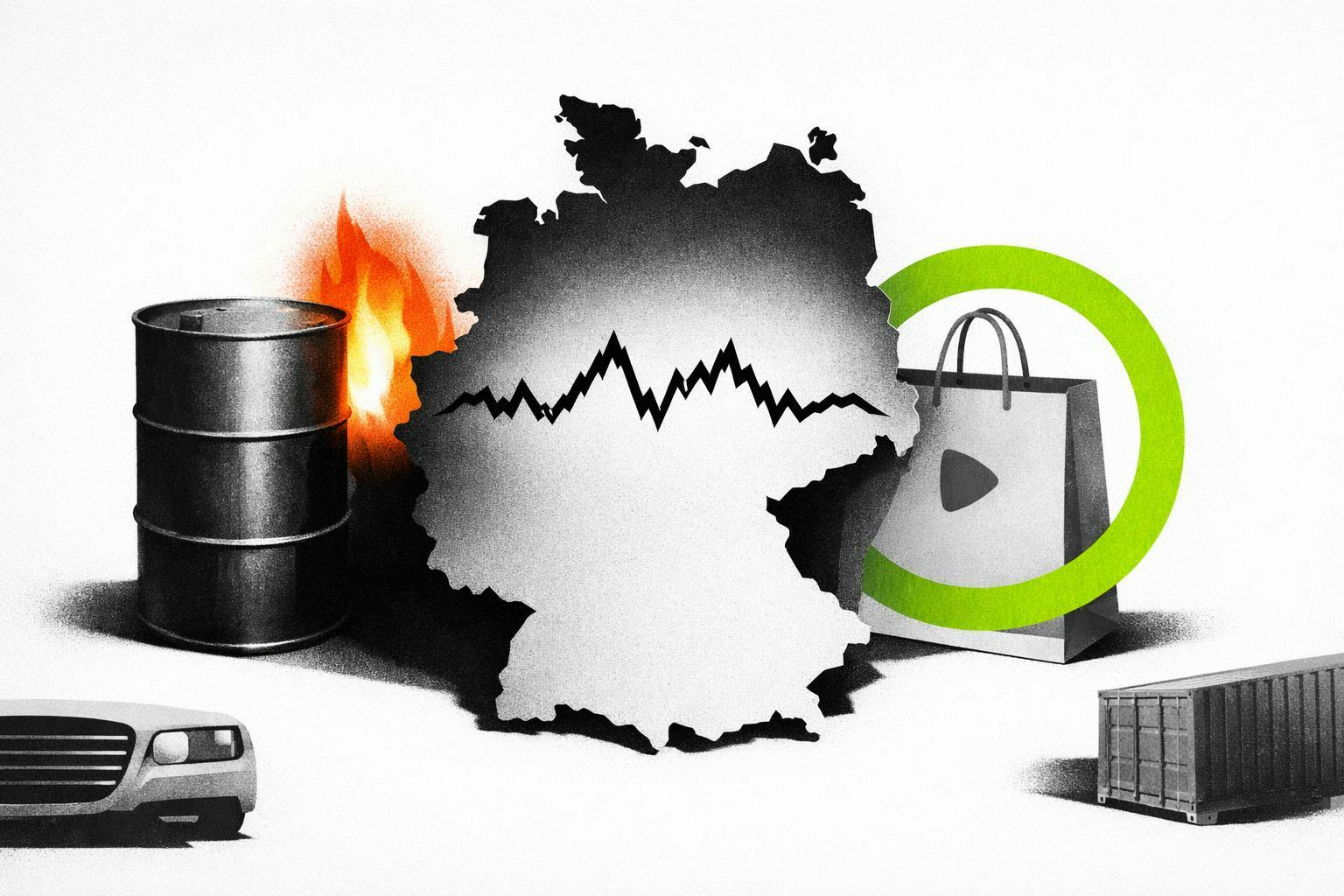
The "floor" for German growth in 2026 will likely be dictated by public spending. Infrastructure projects and the modernization of the energy grid are acting as a structural stabilizer. While private consumption may be dampened by $100 oil, the "fiscal stimulus" narrative—driven by the need for energy independence—provides a long-term bull case for the industrial companies capable of building the new European energy architecture.
Technical Outlook: Analyzing Support and Resistance
From a technical perspective, the DAX is currently testing the resolve of bulls. After a strong start to the year, the index has slipped below several key moving averages, signaling a shift in momentum.
- Moving Averages: The DAX is currently trading below its 20-day and 50-day Simple Moving Averages (SMAs), which are now acting as immediate resistance levels. The 200-day SMA, often seen as the "line in the sand" for long-term trends, is the next major level of support to watch.
- Momentum Indicators: The 14-day Relative Strength Index (RSI) is currently hovering around 36.07. This is approaching "oversold" territory (below 30), suggesting that while the trend is bearish, a short-term relief rally could be on the horizon if oil prices show any sign of peaking.
- Key Levels:
- Pivot Point (P): €24,988
- Downside Support (S1): €24,569
- Upside Resistance (R1): €25,312
If the DAX fails to hold the S1 level of €24,569 on a weekly closing basis, the technical outlook suggests a further slide toward the €23,000 psychological support zone.
2026 Price Targets: Institutional Perspectives
As we look toward the end of 2026, institutional forecasts for the DAX are widely dispersed, reflecting the extreme sensitivity to energy costs and interest rate policy.
| Institution | 2026 Target (Points) | Stance | Key Rationale |
|---|---|---|---|
| DZ Bank | 27,500 | Bullish | Fiscal spending on defense and green energy offset oil shocks. |
| Trading Economics | 20,996 | Bearish | Macro regression based on energy costs and low GDP growth. |
| Long Forecast | 22,150 - 24,800 | Neutral | Range-bound trading as inflation remains above target. |
| Coin Price Forecast | 26,450 | Optimistic | Algorithmic projection based on historical recovery cycles. |
The gap between DZ Bank's optimism and Trading Economics' caution illustrates the "binary" nature of the current market. If the Strait of Hormuz situation is resolved and oil returns to the $70-$80 range, the DAX has the fundamental strength to reach new highs. However, if $100 oil becomes the "new normal" for 2026, the bearish macro regressions may prove more accurate.
Summary for the Strategic Investor
The German market is currently navigating a complex maze. While rising energy costs and a lowered GDP forecast of 0.8% for 2026 create a difficult environment for broad-based growth, the DAX remains a resilient index of world-class exporters.
For the risk-aware investor, the strategy should not be one of total retreat, but of careful allocation. Focus on companies with low energy intensity, high pricing power, or those directly benefiting from the surge in European defense and infrastructure spending. The $100 oil price is a significant hurdle, but in the history of the DAX, these moments of "energy shock" have often served as the catalyst for the next wave of industrial efficiency and innovation.
FAQ: Germany Market Update
1. How do rising oil prices specifically impact the DAX?
Rising oil prices increase production and transportation costs for Germany's large industrial and automotive sectors. Since many DAX companies are energy-intensive, higher oil prices (especially above $100) squeeze profit margins and can lead to lower corporate earnings forecasts, putting downward pressure on the index.
2. Is the German economy expected to enter a recession in 2026?
The current forecast is for a "sluggish recovery" rather than a deep recession, with a projected GDP growth of 0.8% in 2026. However, this is a modest figure that leaves little room for further shocks. If energy prices remain volatile and global demand weakens, the risk of a technical recession remains elevated.
3. What should I watch for in the second half of 2026?
Key indicators include the stability of the Strait of Hormuz, the European Central Bank’s response to core inflation (which is projected to stay above 2.5%), and the quarterly earnings reports of major German industrials to see if they are successfully passing on energy costs to customers.