Our Top Picks
For investors looking to maximize their after-tax returns in 2026, these five funds represent the gold standard of tax efficiency across different asset classes:
- Broad Equities: Vanguard Growth ETF (VUG) – Minimizes dividend tax drag by focusing on companies that reinvest capital.
- Fixed Income: iShares National Muni Bond ETF (MUB) – Provides interest income that is exempt from federal income taxes.
- Cash Proxy: Alpha Architect 1-3 Month Box ETF (BOXX) – Uses options strategies to replicate T-bill returns without the monthly taxable interest.
- Tangible Assets: SPDR Gold MiniShares Trust (GLDM) – A low-cost hedge that generates no annual distributions.
- Digital Assets: Grayscale Bitcoin Mini Trust ETF (BTC) – Offers spot crypto exposure treated as a standard security rather than a collectible.
The Hidden Cost of 'Tax Drag'
Over time, tax drag can quietly erode performance just as much as a bad investment decision. While most investors obsess over expense ratios and alpha, the amount you hand over to the IRS every April can be the difference between reaching your retirement goals early or working an extra five years.
In a tax-sheltered account like a 401(k) or an IRA, you can trade freely without immediate tax consequences. However, in a taxable brokerage account, every dividend, interest payment, and capital gain distribution is a "leak" in your compounding engine. By 2026, with shifting fiscal policies and market volatility, managing this leak is no longer optional—it’s a core requirement for portfolio survival.
The Mechanism: Why ETFs Outshine Mutual Funds
The primary reason ETFs are more tax-efficient than mutual funds lies in a technical process called the "in-kind" creation and redemption mechanism.
When a mutual fund investor wants to cash out, the fund manager often has to sell underlying securities to raise cash. If those securities have appreciated, the sale triggers capital gains, which are passed on to all remaining shareholders. You could literally owe taxes on a mutual fund that lost money during the year just because the manager sold winning positions.
In contrast, ETFs rarely sell securities for cash. Instead, they "exchange" them with specialized market makers (Authorized Participants). Because these are in-kind transfers rather than sales, they do not trigger capital gains. This allows the fund to wash away low-basis shares and keep your tax bill at zero until the day you decide to sell your ETF shares.
Selection Criteria: Building a Durable 2026 Portfolio
Not every ETF is created equal. To earn a spot in a sophisticated taxable brokerage account, a fund must meet three rigorous standards:
- Liquidity: A minimum of $1 billion in Assets Under Management (AUM) to ensure tight bid-ask spreads.
- Cost Efficiency: An expense ratio capped at 0.20% (with one or two specialized exceptions).
- Tax-Aware Design: A structural reason why the fund minimizes distributions, such as low turnover or tax-exempt income.
1. The Equity Powerhouse: Vanguard Growth ETF (VUG)
If you are investing in a taxable account, "Value" stocks are often your enemy. Why? Because value stocks tend to pay higher dividends, and those dividends are taxed every single year.
The Vanguard Growth ETF (VUG) takes the opposite approach. It invests in companies like Apple, Microsoft, and Amazon—firms that prioritize reinvesting their profits into R&D and expansion rather than cutting a check to shareholders.
Why it wins in 2026: By focusing on growth, VUG maintains a remarkably low 30-day SEC yield of just 0.38%. Compared to a value-oriented fund or a total market index yielding 1.5% or more, VUG significantly reduces your annual tax liability. You are essentially deferring your taxes, allowing that money to stay in the market and compound for decades until you decide to sell at long-term capital gains rates.
| Metric | Details |
|---|---|
| Inception | 2004 |
| Expense Ratio | 0.04% |
| 30-Day SEC Yield | 0.38% |
| Primary Benefit | Low dividend yield / Long-term capital growth |

Tax Tip: Growth ETFs are ideal for "Asset Location." Keep your high-dividend stocks and REITs in your Roth IRA, and keep your low-yield growth engines like VUG in your taxable brokerage account.
2. The Income Shield: iShares National Muni Bond ETF (MUB)
For high-income earners in 2026, traditional bond interest is a tax nightmare. If you are in the 35% or 37% tax bracket, a 5% yield on a Treasury bond effectively becomes a 3.15% yield after the IRS takes its cut.
The iShares National Muni Bond ETF (MUB) solves this by investing in municipal bonds—debt issued by states and cities to fund public projects. The interest paid by these bonds is exempt from federal income taxes.
Why it wins in 2026: To understand the true value of MUB, you have to look at the Tax-Equivalent Yield. While MUB might show a nominal yield of 3.15%, for an investor in the highest tax bracket, that is equivalent to earning 5.32% in a taxable bond. MUB provides the stability of fixed income without the heavy tax burden that usually accompanies it.
| Metric | Details |
|---|---|
| Assets Under Management | $38B+ |
| Expense Ratio | 0.05% |
| Tax Status | Federal Tax-Exempt |
| Target Audience | High-bracket income earners |
3. The Modern Cash Proxy: Alpha Architect 1-3 Month Box ETF (BOXX)
One of the most innovative developments in the ETF world is the "Box Spread" strategy. Traditionally, if you wanted to hold "cash" and earn interest, you would buy a Money Market fund or T-bills. However, both of these generate monthly interest that is taxed at ordinary income rates.
The Alpha Architect 1-3 Month Box ETF (BOXX) uses a multi-leg options strategy known as a "box spread" to replicate the returns of Treasury bills. Crucially, because it uses options rather than holding the debt directly, the fund aims to avoid regular taxable interest distributions.
Why it wins in 2026: Instead of getting a 1099-INT for interest every year, investors in BOXX see the value of their shares grow, similar to a stock. When you eventually sell, your gains are potentially treated as capital gains rather than ordinary income. With an average yield to options expiry of approximately 3.91%, BOXX is an incredibly sophisticated tool for managing short-term cash without the tax headache.

4. The Tangible Hedge: SPDR Gold MiniShares Trust (GLDM)
In a diversified portfolio, commodities act as a hedge against inflation and currency devaluation. However, many commodity ETFs use futures contracts, which are subject to "60/40" tax rules (60% long-term, 40% short-term capital gains) regardless of how long you hold them.
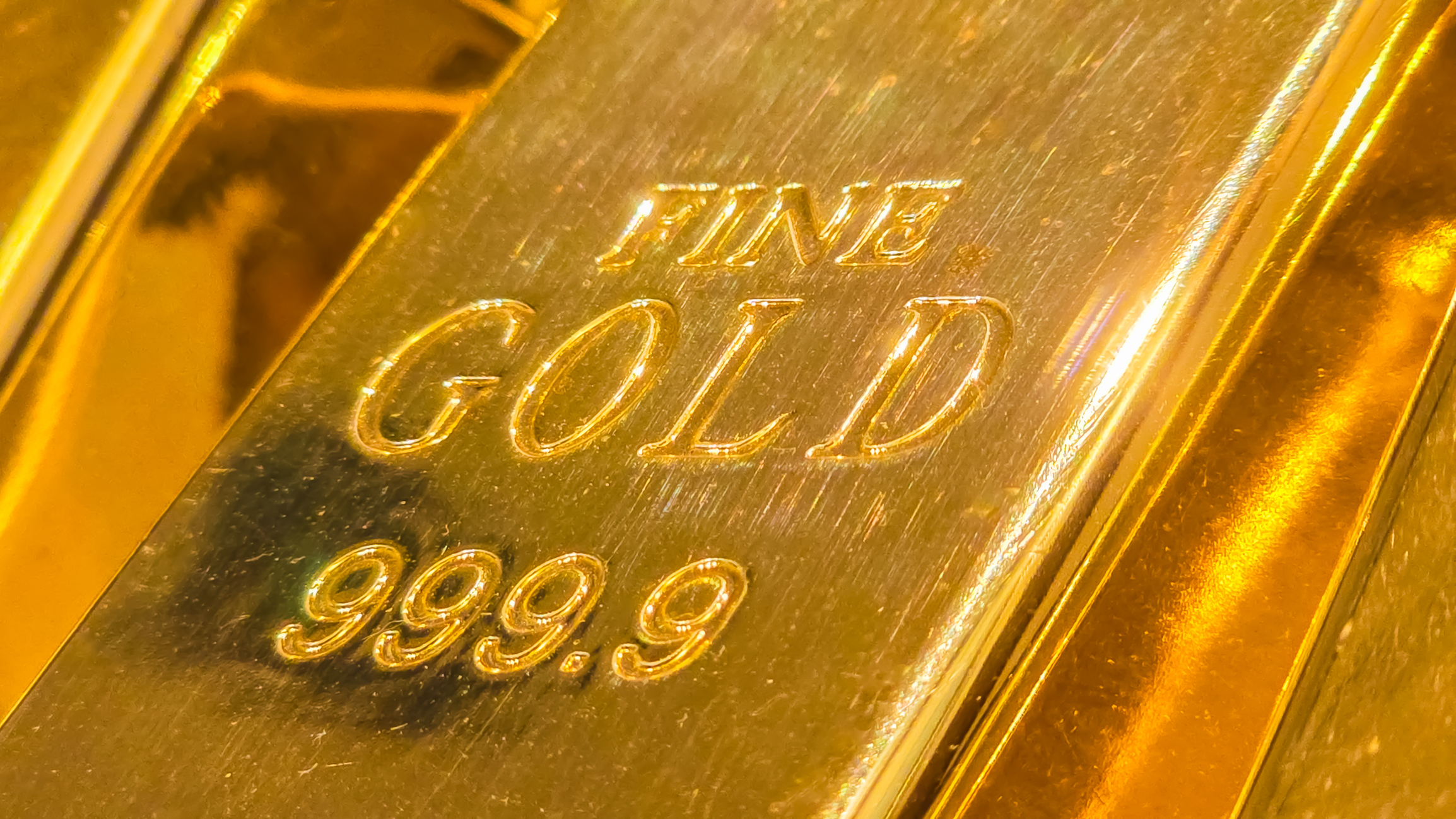
The SPDR Gold MiniShares Trust (GLDM) holds physical gold bullion. Because gold doesn’t pay dividends or interest, it produces zero annual tax distributions.
Why it wins in 2026: GLDM offers the lowest expense ratio in the gold ETF space at just 0.10%. While gold is technically taxed at a "collectible" rate (maximum 28% for long-term holdings), the lack of annual turnover or income makes it a very "quiet" asset in a taxable account. You only pay when you exit, giving you full control over the timing of your tax bill.
| Metric | Details |
|---|---|
| Expense Ratio | 0.10% |
| Annual Distribution | $0.00 |
| Tax Treatment | Collectible (upon sale) |
| Primary Use | Inflation hedge / Non-correlated asset |
5. The Digital Alpha: Grayscale Bitcoin Mini Trust ETF (BTC)
With the maturation of the crypto market, spot Bitcoin ETFs have become a viable component of a modern portfolio. For a brokerage account, the Grayscale Bitcoin Mini Trust ETF (BTC) is a standout for its ultra-low fee structure.
Why it wins in 2026: Unlike physical gold, spot Bitcoin ETFs are currently treated as standard securities for tax purposes in many jurisdictions. This means they are eligible for standard long-term capital gains rates (0%, 15%, or 20%) if held for more than a year—favorable compared to the 28% collectible rate for gold.
Since Bitcoin pays no dividends and the fund does not engage in staking (which would trigger taxable income), your tax liability is 0% until you sell. With a 0.15% expense ratio, it is one of the most efficient ways to gain exposure to digital assets without the complexity of managing private keys or dealing with complicated crypto-to-crypto tax reporting.

Strategy Summary: Asset Location vs. Asset Allocation
Successful investing in 2026 requires more than just picking the right "what"; it requires picking the right "where." This is the concept of Asset Location.
- Taxable Accounts: Should hold the five ETFs listed above. These are your "tax-efficient" anchors.
- Tax-Deferred Accounts (401k/Traditional IRA): Should hold your high-turnover active funds and taxable corporate bonds.
- Tax-Free Accounts (Roth IRA): Should hold your highest-growth potential assets and high-dividend payers (REITs).
2026 Tax-Efficient ETF Comparison Table
| ETF Ticker | Asset Class | Expense Ratio | Primary Tax Advantage |
|---|---|---|---|
| VUG | Growth Equities | 0.04% | Extremely low dividend yield |
| MUB | Municipal Bonds | 0.05% | Federal tax-exempt interest |
| BOXX | Cash Proxy | 0.19% | Converts interest into capital gains |
| GLDM | Gold | 0.10% | No annual distributions |
| BTC | Digital Assets | 0.15% | Standard security tax treatment |
Key Takeaway: By combining these five assets, you create a portfolio that is diversified across equities, fixed income, cash, commodities, and digital assets—all while minimizing the "tax drag" that slows down your wealth-building journey.
FAQ
Are ETFs always more tax-efficient than mutual funds? Generally, yes. Due to the in-kind creation and redemption process, ETFs avoid triggering capital gains when other investors sell their shares. However, some "active" ETFs with high turnover may still distribute capital gains, so always check the fund's historical distribution data.
What is a "Tax-Equivalent Yield"? This is a formula used to compare the yield of a tax-exempt bond (like a Muni) to a taxable bond. It shows you what interest rate a taxable bond would need to pay to match the after-tax return of the Muni bond.
Does holding Bitcoin in an ETF change the tax rate? In many cases, yes. While holding physical Bitcoin might involve complex reporting, holding a spot ETF like BTC is treated like a stock. If you hold it for over a year, you qualify for long-term capital gains rates, which are typically lower than ordinary income rates.
Conclusion
The difference between a 7% return and a 7% after-tax return is the difference between financial security and true wealth. As we navigate the investment landscape of 2026, the tools at our disposal—from Muni bonds to box-spread ETFs—have never been more powerful.
By prioritizing "tax-aware" assets like VUG, MUB, and BOXX in your taxable brokerage account, you aren't just investing; you are strategically defending your capital against the silent erosion of tax drag. Start by auditing your current holdings: if an asset is generating a high taxable yield that you don't currently need for income, it may be time to swap it for a more tax-efficient alternative.