For the past two years, the stock market has been fueled by a single, powerful narrative: generative AI will change everything. From the stratospheric rise of Nvidia to the "AI-adjacent" rallies in utilities and copper, the exuberance has been palpable. However, as we peer into the 2026 horizon, the atmosphere is shifting. Investors are no longer asking what AI can do; they are asking when it will pay for itself.
The "Goldilocks" phase of AI investing—where every announcement of a new Large Language Model (LLM) sent share prices soaring—is concluding. We are entering the "Year of Proof." This isn't a signal of the boom's end, but rather a maturation of the market. To navigate this, you need to understand the "Velocity Paradox": the reality that while AI technology is advancing at an exponential rate, the operational readiness of the global economy and the regulatory frameworks governing it are struggling to keep pace.
Direct Answer: Is the AI Boom Over? No, the AI boom is not over. However, it is fundamentally shifting from a speculative "Hype Phase" to a "Year of Proof." By 2026, companies will no longer be rewarded for promise alone; they must demonstrate tangible ROI, navigate intensifying regulatory hurdles, and overcome significant energy bottlenecks. The winners of the next decade are transitioning from building models to deploying industrial-grade solutions.
The $500 Billion Question: Unprecedented Infrastructure Spending
The most significant headwind facing tech stocks in 2026 is the sheer scale of capital expenditure (CAPEX). We are witnessing a historic arms race among the "Hyperscalers"—Microsoft, Alphabet, Meta, and Amazon—who are pouring hundreds of billions into data centers and custom silicon.
The numbers are staggering. Meta, for instance, is projected to see its AI infrastructure spending surge by nearly 92% year-over-year, reaching an estimated $135 billion in 2026. Much of this is earmarked for its "Meta Superintelligence Labs" initiative, a bold bet that AGI (Artificial General Intelligence) is the only path to maintaining its social media dominance.
| Company | Projected 2026 CAPEX | Primary Investment Focus |
|---|---|---|
| Meta | $135 Billion | Meta Superintelligence Labs; Llama 4/5 Training |
| Microsoft | $150 Billion+ | Azure AI Global Footprint; OpenAI Partnership |
| Alphabet | $95 Billion | Custom TPU Development; Gemini Integration |
| Amazon | $110 Billion | AWS Bedrock; Trainium & Inferentia Chips |
Why should this concern the long-term investor? Because CAPEX of this magnitude puts immense pressure on margins. While cloud revenue growth remains robust—seen in the massive backlogs for Azure and Google Cloud—the "time to value" is lengthening. In 2026, the market will scrutinize whether these planet-scale AI factories are generating incremental cash flow or if they are simply a "cost of doing business" to avoid obsolescence.
Regulatory Minefields and Supply Chain Bottlenecks
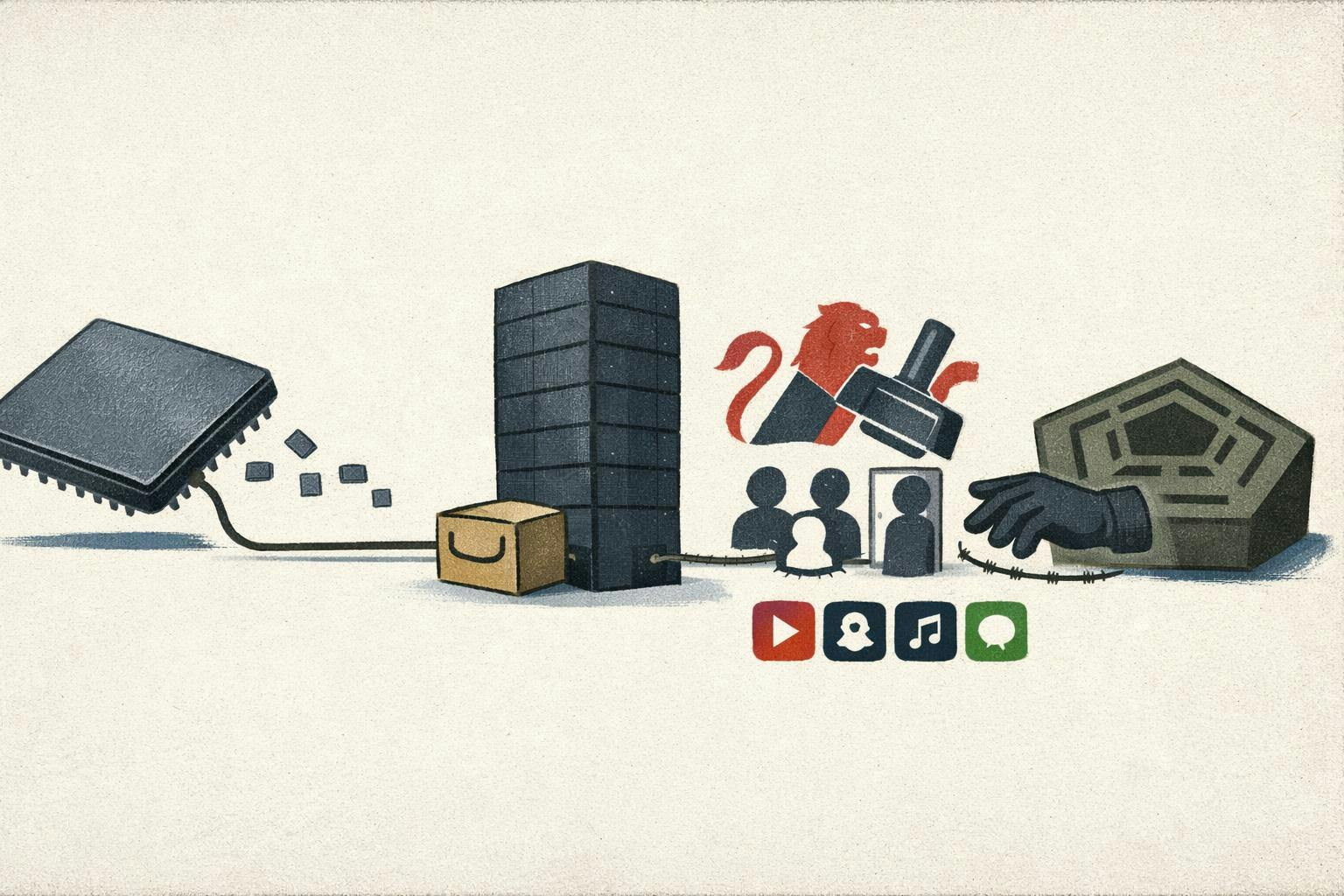
As AI moves from the lab to the core of the economy, it has attracted the full attention of global regulators. By August 2026, the EU AI Act will reach its full implementation deadline. This isn't just another piece of "red tape"; it is a fundamental earnings input.
The Act introduces stringent requirements for "high-risk" AI systems, including those used in critical infrastructure, recruitment, and law enforcement. Non-compliance could result in penalties of up to 7% of a company’s global annual turnover. For a company like Microsoft or Alphabet, that represents billions of dollars in potential risk. We are also seeing a shift in focus toward "Defense AI" and social media algorithms, as governments become increasingly wary of AI’s role in information warfare and mental health.
Beyond regulation, the physical limits of the world are beginning to bite. The AI boom is hungry—not just for chips, but for power. Projections suggest that global electricity consumption for data centers could reach 945 TWh by 2030, nearly doubling from 2023 levels. In 2026, the constraint on AI stock growth may not be a lack of demand for software, but a lack of transformers, power lines, and cooling systems.
The Long-Term Winners: Moving Beyond the Hype
Despite the looming "reality check," the fundamental value proposition of AI remains intact. From a portfolio strategy perspective, the key is to differentiate between the "temporary winners" of the hype cycle and the "structural winners" of the AI era.
Direct Answer: Which AI companies are the best long-term plays? ASML, Nvidia, and Microsoft remain the gold standard for long-term AI exposure. ASML holds a monopoly on the lithography required for next-gen chips; Nvidia continues to outpace competitors with its Rubin architecture; and Microsoft possesses the only truly "full-stack" AI advantage—spanning infrastructure, foundation models, and enterprise software.
1. ASML: The Monopoly on Miniature
If you believe that AI chips will continue to get more powerful and efficient, you must believe in ASML. They hold a virtual monopoly on Extreme Ultraviolet (EUV) lithography machines. By 2026, their "High-NA" EUV machines will be the industry standard for producing the 2nm and 1.4nm chips that will power the next generation of LLMs.
2. Nvidia: From Blackwell to Rubin
The skepticism around Nvidia often centers on "peak margins." However, Nvidia isn't just a chip company; it is a software and networking ecosystem. As they transition from the Blackwell architecture to the Rubin architecture in 2026, they are maintaining 70%+ gross margins by offering a vertically integrated stack (NVLink, CUDA software, and InfiniBand networking) that competitors like AMD or Intel still struggle to replicate.
3. Microsoft: The Full-Stack Advantage
Microsoft’s genius lies in its diversification. Unlike pure-play hardware companies, Microsoft captures value at every level of the AI stack. If businesses want to build their own models, they use Azure. If they want to use pre-built models, they use OpenAI via Microsoft. If they want to use AI-powered productivity tools, they subscribe to Copilot. This "triple-threat" makes them uniquely resilient to shifts in any single part of the AI market.
Emerging Battlegrounds: Inference Economics and Agentic AI
While the headlines focus on training models, the real story of 2026 will be inference—the process of running the models once they are trained.
The economics of inference are changing at a dizzying pace. LLM inference costs have declined by approximately 98% in four years, falling from $20 per million tokens in 2022 to a projected $0.40 for equivalent performance in 2026. This "deflationary" trend is a double-edged sword. It makes AI more accessible to startups, but it also threatens to commoditize the models themselves.
This cost reduction is the primary driver behind the rise of Agentic AI. We are moving away from "chatbots" that answer questions toward "agents" that can execute complex, multi-step business workflows—such as managing a supply chain or conducting a legal audit—without human intervention. The Agentic AI market is expected to reach $45 billion by 2026, shifting the focus from "how smart is the model?" to "how useful is the action?"
Furthermore, the "Big Tech" firms are increasingly designing their own custom silicon to bypass Nvidia’s high prices. Google’s TPU v7 and Amazon’s Trainium2 are becoming serious contenders for internal workloads, creating a more fragmented—and competitive—hardware landscape.
Risk Management: How to Evaluate AI Stocks in 2026
As an editor focused on portfolio strategy, I advise moving away from "blind participation" in tech ETFs. The 2026 reality check requires a surgical approach. When evaluating your tech holdings, look for these three pillars:
Evaluation Criteria for 2026:
- Revenue Realization: Is the company showing a direct correlation between AI spending and top-line growth? (Look for "AI contribution" metrics in earnings calls).
- Inference Optimization: Does the company have a strategy to reduce the cost of running AI at scale?
- Regulatory Defensibility: Does the company have the legal and compliance infrastructure to handle the EU AI Act and global privacy standards?
Conversely, be wary of companies that exhibit these warning signs.
Investor Red Flags:
- The CAPEX Gap: Revenue growth that consistently lags behind infrastructure spending growth for more than four quarters.
- Single-Vendor Dependency: Total reliance on a single GPU provider without a roadmap for custom silicon or multi-cloud flexibility.
- "AI-Washing": Vague promises of "integrating AI" into legacy products without clear pricing power or customer adoption data.
FAQ
Which AI stocks are best positioned for 2026? The most resilient stocks are those that own the "bottlenecks" of the industry. This includes ASML (lithography), Nvidia (high-end GPUs and networking), and Microsoft (the enterprise software entry point). Additionally, look toward utilities and energy companies that provide the power infrastructure for data centers.
Is Nvidia still a good investment despite margin contraction? Yes, but the "easy money" has been made. Nvidia’s value in 2026 will be defined by its Rubin architecture and its ability to turn its CUDA software platform into a recurring revenue stream. Expect higher volatility as competition from custom silicon (TPUs) increases.
How will the EU AI Act impact US tech giants? It will increase operational costs and slow down the rollout of certain features in Europe. The biggest risk is the "Brussels Effect," where European regulations become the de facto global standard, forcing US companies to overhaul their data practices globally to maintain a single product line.
Conclusion: Navigating the 2026 Outlook
The AI boom is not ending; it is simply shedding its skin. The speculative fervor of 2023 and 2024 is being replaced by a more sober, fundamental-driven market in 2026. This "reality check" is healthy. It will separate the companies that are merely riding the wave from those that are building the ocean.
As an investor, your job is to stay focused on the fundamentals. The infrastructure is being built at a scale never seen in human history. The cost of intelligence is plummeting by 98%. The transition to Agentic AI is just beginning. By focusing on the "picks and shovels" and the "full-stack" giants, you can navigate the volatility of the Year of Proof and position your portfolio for the decade of deployment that follows.