Quick Facts
- Growth Target: 1,300 stores (a 97.5% increase from the current 658-store footprint).
- The Algorithm: 10% annual unit growth + ~2% same-store sales growth = mid-teens EPS growth.
- Market Opportunity: Aggressively acquiring real estate and inventory from liquidating competitors like Big Lots and Bed Bath & Beyond.
- Loyalty Power: Ollie’s Army grew by 23% recently, far outpacing overall customer file expansion.
- Financial Strength: $563 million in cash/investments with zero meaningful long-term debt.
- 2026 Guidance: Projected EPS of $4.40 to $4.50.
For long-term investors, the narrative surrounding Ollie’s Bargain Outlet (OLLI) has shifted from a niche "closeout" retailer to a disciplined growth engine. At the heart of this transformation is a bold roadmap to reach 1,300 stores—nearly doubling its current presence across the United States. While the retail sector at large faces headwinds from shifting consumer habits and inflationary pressures, Ollie’s is positioning itself as a primary beneficiary of the industry’s "great shakeout."
The Road to 1,300 Stores
Ollie’s Bargain Outlet currently operates 658 locations across 35 states. To the uninitiated, the leap to 1,300 stores might seem like an overextension. However, for those of us who track portfolio strategy, this isn't just a number; it is a calculated land grab supported by the company’s unique supply chain dynamics.
The company is currently in the middle of a massive expansion phase, aiming for a 97.5% increase in total store count. This isn't just about planting flags in new territories; it’s about density. By filling in gaps in existing markets and expanding into contiguous states, Ollie’s can leverage its existing distribution centers—like the recently expanded facility in York, Pennsylvania, and the new center in Illinois—to keep logistics costs low while driving brand awareness.
From an investment perspective, this expansion represents a significant "runway." Many retail stories fail because they hit a saturation point too early. Ollie’s, by contrast, has identified hundreds of viable markets where their "Good Stuff Cheap" mantra resonates deeply with the budget-conscious consumer.
Decoding the 'Ollie's Growth Algorithm'
The "Ollie's growth algorithm" is a term often used by management to describe the mathematical certainty they aim to bring to shareholder returns. It is a three-pronged approach designed to deliver consistent, mid-teens earnings per share (EPS) growth. For investors, understanding these components is vital for assessing the stock’s long-term valuation.
| Component | Target Metric | Portfolio Impact |
|---|---|---|
| New Unit Growth | ~10% Annually | Drives top-line revenue through physical expansion (approx. 75-86 new stores/year). |
| Same-Store Sales (SSS) | ~2% Growth | Ensures the existing fleet remains productive and captures organic inflation/demand. |
| Margin Management | 40% - 40.5% Gross Margin | Protects profitability even while reinvesting in low prices for customers. |
| EPS Outcome | Mid-teens Growth | The compounding result of volume growth and operational leverage. |
When these factors align, the result is a powerful compounding machine. The 10% unit growth provides the bulk of the momentum, while the modest 2% same-store sales growth ensures that the company isn't just growing for the sake of growth, but maintaining a healthy "same-store" base. This algorithm has allowed Ollie's to maintain a premium valuation compared to some of its slower-growing peers in the discount space.
Capitalizing on the 'Retail Shakeout'
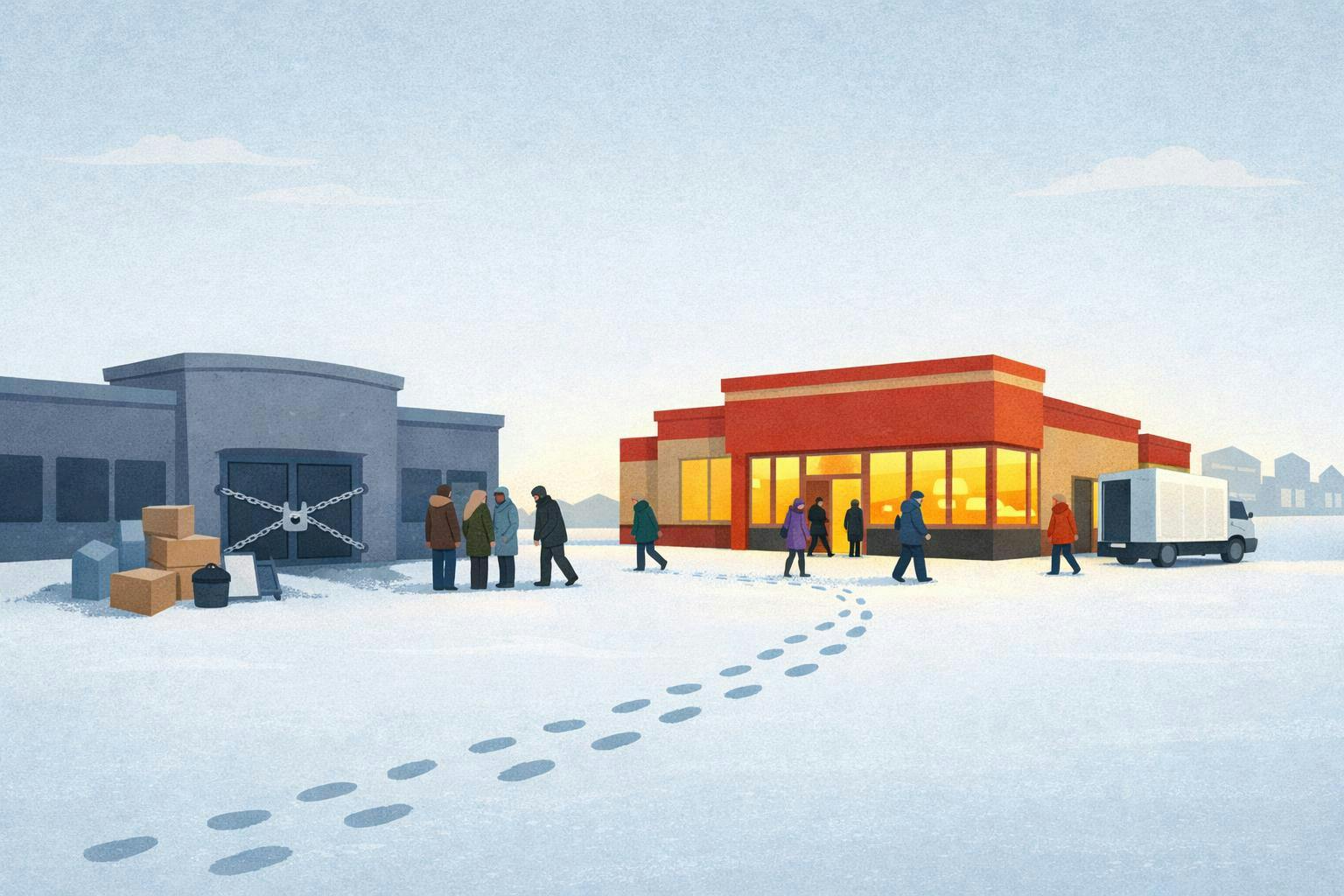
The most compelling part of the Ollie’s story right now isn't what they are doing, but what their competitors can't do. We are currently witnessing a significant "retail shakeout." High-profile bankruptcies and liquidations—most notably Big Lots, Bed Bath & Beyond, and Joann Fabrics—have created a vacuum in the market.
Ollie’s thrives in this environment in two specific ways:
- Displaced Demand: When a Big Lots or a local discount competitor closes its doors, the demand from those budget-conscious shoppers doesn't disappear; it migrates. Ollie’s is expertly positioned to capture this "homeless" demand, often seeing a surge in new customers whenever a nearby competitor exits the market.
- Inventory Deal Flow: Ollie’s business model is built on "closeouts." When other retailers struggle or manufacturers overproduce, Ollie's buys that excess inventory at cents on the dollar. The recent wave of retail distress has led to an unprecedented "deal flow," allowing Ollie’s to stock its shelves with premium brands at prices that traditional retailers simply cannot match.
- Strategic Real Estate: Expanding a retail footprint is expensive, but Ollie’s has mastered the art of "second-generation" real estate. Rather than building from the ground up, they move into the "big box" shells left behind by fallen retailers. This significantly reduces capital expenditures (CapEx) and speeds up the timeline for a new store to become profitable.
"In a period of retail distress, Ollie’s is the vulture that doesn't just survive but thrives. They are turning the misfortune of others into a strategic advantage for their shareholders." — Investment Strategy Perspective
The Loyalty Engine: Ollie’s Army
While store count and real estate are the physical manifestations of growth, the "Ollie’s Army" loyalty program is the digital engine driving the business. In the most recent fiscal period, memberships in Ollie’s Army surged by 23%. To put that into perspective, the overall customer file expanded by only 12% during the same period.
This 11-percentage-point gap is critical. It suggests that not only are more people shopping at Ollie’s, but a much higher proportion of those people are becoming "enlisted" members. Why does this matter for investors?
- Higher Basket Size: Members of Ollie's Army historically spend significantly more per visit than non-members.
- Data-Driven Marketing: With 17 million members, Ollie's can use purchase data to drive traffic through "Ollie’s Army Night" events and exclusive tiered promotions (Rank & File, Sergeant, General).
- Retention: In a world of infinite choices, loyalty programs create "sticky" customers. The 23% surge indicates that the brand's value proposition is resonating more deeply than ever in an era of high food and housing costs.
Financial Health and Capital Allocation
As an editor focused on risk-aware strategy, I find Ollie’s balance sheet to be one of its most attractive features. In an era where many retailers are burdened by high interest rates and massive debt loads, Ollie’s stands out with a remarkably clean financial profile.
The company currently holds approximately $563 million in cash and short-term investments, with virtually no long-term debt. This "fortress balance sheet" gives them the flexibility to be aggressive when opportunities arise. For instance, if a prime real estate portfolio becomes available through another bankruptcy auction, Ollie’s has the cash on hand to act quickly.
Furthermore, the company's capital allocation strategy is highly shareholder-friendly. Management has indicated a plan to return roughly 50% of free cash flow to shareholders. For fiscal 2026, they have set a target of $100 million in share repurchases. This buyback program, combined with the projected EPS of $4.40 to $4.50, provides a solid floor for the stock price and enhances total shareholder return.
Potential Headwinds and Risks
No investment is without risk, and Ollie’s faces several hurdles as it scales toward 1,300 stores. Investors should keep a close eye on the following factors:
- The 'Reverse Waterfall' Effect: As Ollie’s opens a record number of new stores, there is a temporary "drag" on margins. New stores typically take a few months to reach peak efficiency and sales volume. If a high concentration of stores opens simultaneously, it can lead to short-term earnings volatility.
- Macroeconomic and Geopolitical Risks: While Ollie’s is a "trade-down" beneficiary during recessions, it is not immune to global supply chain issues. Potential tariffs or shipping disruptions could impact the cost of goods, although their domestic closeout model provides more insulation than retailers who rely heavily on direct imports.
- Weather Sensitivity: We saw this during the recent Black Friday period; severe weather in key regions can disrupt quarterly performance. Because Ollie’s doesn't have a robust e-commerce platform (by design, to keep costs low), they are more susceptible to physical foot traffic disruptions.
Conclusion: The Long-Term Investment Thesis
The investment thesis for Ollie’s Bargain Outlet is centered on its ability to execute a high-growth plan within a fragmented and distressed retail landscape. By doubling its store count to 1,300 units, the company is not just expanding its reach; it is scaling its "growth algorithm" to a level that few discount retailers can match.
For the long-term investor, the combination of a debt-free balance sheet, a surging loyalty program, and a proven ability to capitalize on competitor liquidations makes OLLI a compelling "all-weather" stock. While short-term fluctuations due to weather or store opening schedules are possible, the structural drivers—10% unit growth and mid-teens EPS targets—suggest that the road to 1,300 stores will be paved with significant shareholder value.
FAQ
Why is Ollie's focusing on physical stores instead of e-commerce? Ollie's business model relies on the "treasure hunt" experience and keeping overhead costs extremely low. The costs associated with shipping and managing an e-commerce platform would likely erode their 40% gross margin and prevent them from offering the deep discounts (up to 70% off) that their customers expect.
How does the bankruptcy of Big Lots affect Ollie’s? It is a double-win for Ollie's. First, it removes a direct competitor, allowing Ollie's to capture "displaced" customers. Second, it creates opportunities for Ollie's to acquire high-quality real estate leases and liquidated inventory at a fraction of their market value.
What is the 'Ollie's Growth Algorithm'? It is a financial framework where the company targets 10% annual new store growth and approximately 2% same-store sales growth to achieve mid-teens growth in earnings per share (EPS) over the long term.